

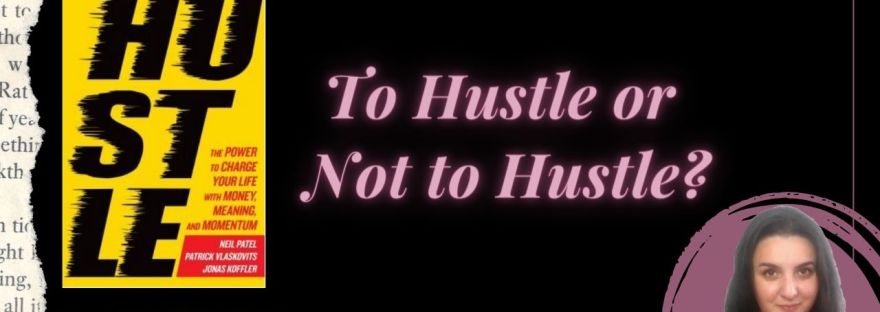
This book by Neil Patel, Patrick Vlaskovits and Jonas Koffler is a good one to teach you to work harder and smarter. Stories and examples help to illustrate how hustle – undertaking a series of various projects throughout your working life, will help you in unexpected ways.
My Key Ideas from Hustle 📌
- Risk is inevitable. Failure is inevitable. Projects are the ideal way to trick your brain into taking risks and even, potentially, failing. The experience you gain by finishing projects is invaluable.
- Small risks strengthen us. If you face no pain in what you are experimenting with, you have not grown. Aim for a “daily dose of small pain“.
- Start doing what you want 10 minutes a day. No thought, no judgement, just doing.
Hustle – My Review
I was thinking a lot of how the world has changed in the last 2 years and how people search for meaning a lot more outside of work. Hustle culture is now deemed to be toxic. This lead me to think I really need to read a book on hustle in the old days. 6 years ago sounds like a right amount of old…so here we are. I chose this book because I know Neil Patel from Youtube (which, funnily enough, has become the perfect side-hustle).
What I disliked about this book is what I dislike about most self development books – the stories. They are always thought out, they prove their point and I occasionally actually learn something interesting from them. However, they are so, so, so many! The points they make are often already clear by stating them. If you don’t believe me, read on the book chapter by chapter below…see if you actually miss them!

However, other than that…I can say the title is accurate. The book actually claims the way to find meaning, as well as money, is through hustling. It defines hustling very loosely though. Hustling, here, becomes every activity. Those often unpaid hustles(or at least not yet paid) for which you volunteer at the end of the week, for example, can help you just as much as your paid hustles.
There is also a small chapter dedicated to scheduling time for creativity. It advises 4 to 8 hours a week of “off time”. So… plenty, right?
Well.. perhaps this is the main problem with hustling. There is no real down time. Not when you are always focused on opportunities, at work and outside of work. Not when, for every interaction, you need to think “How can this person serve me?”. Not even if the question is “How can I serve this person?”, with no ulterior reason. Because it makes the interaction artificial and shallow.
The message of this book is not wrong. It is also not completely right either.
It is so true that work gives us meaning because it is viewed as the way we serve society. We don’t serve society by just existing. We need to bring value to it in order for us to feel valuable. Work is a way to bring value to those around you. It is also not the only way to bring value to those around you.
But the book doesn’t claim anything of this sort. This is something we understand from the way our society is organised. The book and the entire hustle movement is just a way of living. Not the only way.
Does it have benefits? Yes! Hustling, as shown in this book, means taking action. Finishing projects. Discovering your talents. Diversifying your interests. Landing a job or a promotion. All through projects you get involve in, things you do every day, at your main job or outside of it.
All these things lead to experiences which enrich your life. And I actually love that idea! It focuses on doing things and taking risks. I see this as a very positive thing. So when does all this become negative? It’s simple…when you don’t periodically stop to reassess. The infinite hustle, which should create the mindset of the lifetime student creates instead the mindset of a lifetime of disappointment, of feeling it is never enough. So instead of curiosity and excitement with each project, we start feeling dread, tired of starting again.
The solution, as I see it, would mean to stop more to think and do nothing. It is what, in theory, this book says as well… I just don’t think anyone hears that part too often.
My Future Approach to Hustle
I think hustling is not bad in itself. Not at all. I think all it needs is to be approached differently: like a book. You should immerse yourself completely while reading/working and then stop and think about what you learned. Do not jump to the next book/hustle immediately! Wait. Think. Assess what you liked, what you didn’t like, what you learned, how you evolved because of it. Get to know yourself again after each experience. Only then hustling will truly help you and will stop being toxic.
If you liked my review, be sure to check out the chapter-by-chapter summary here and see if this book is for you!
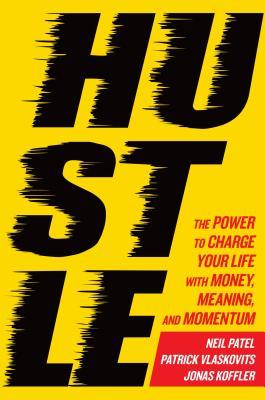
You can find the book here:

 Read Fine Books
1 thought on “Hustle: The Power to Charge Your Life with Money, Meaning, and Momentum”