
I am Romanian and I love Romanian literature!
Sadly, for the most part, Romanian books are either not translated into English or their translation is not very good, making the book lose its original charm.
This, however, is a list of the best Romanian books that have an English translation.
I loved most of them and really liked the others, so I hope you’ll enjoy them too!
In no particular order, let’s get into it:
- The Accident
- The Town with Acacia Trees
- Life Begins on Friday
- Letters to a Young Gymnast
- Confessions of an Emigrant
- Forest of the Hanged
- The Book of Perilous Dishes
- Nostalgia
- The Hunger Angel
- Squaring the Circle
- Conclusion

The Accident
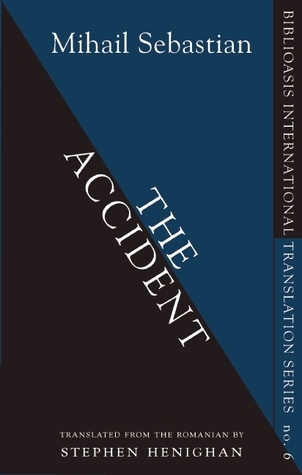
“The Accident” was originally published by Mihail Sebastian in 1940 and has only recently been translated into English.
It’s the 18th of December 1934 and Nora (single, a French teacher) has a minor accident. This is how she meets Paul, a lawyer who offers to walk her home. She finds out it’s his birthday and they decide to celebrate, but Nora can sense Paul’s sadness – he is in love with someone else. However, they remain friends and decide to spend the winter break together, skiing.
The magic happens when Nora teaches Paul how to ski: he feels happy and alive again. Together they go through various problems in finding lodging (it is the middle of the season and they have no reservations), problems that only help bring them closer.
If you think this is just a cute rom-com, you are wrong. Mihail Sebastian is masterful in building real characters, as well as evoking emotions and mystery.
You can learn more about this novel in my review, as I loved it a lot.
The Town with Acacia Trees
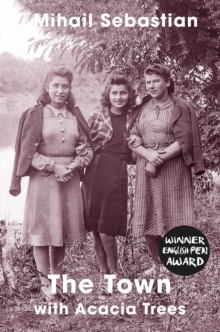
“The Town with Acacia Trees” was originally published by Mihail Sebastian in 1935 and deals with transitioning from adolescence to maturity.
Set first in a small provincial town in Romania, the story starts with Miss Adriana Dunea getting her period. It follows her as she becomes interested in boys, giving up school as she starts her social life. We witness her first love and all her experiences with her group of friends until she is ready for marriage. I have to say I was surprised by who she finally chose as her husband, but I won’t spoil that.
Mihail Sebastian does a marvellous job again in showing the social life of the time and in building the characters in a very realistic way.
More of my thoughts are in this review.
Life Begins on Friday

“Life Begins on Friday” isn’t a novel I was particularly impressed with from an action point of view, even though it abounds in mystery (it is a detective novel, after all). I was, however, fascinated by how well the author, Ioana Parvulescu, manages to describe the Bucharest atmosphere of the last years of the 1800s.
The level of documentation is perfect if you love historical novels! The author goes into a lot of detail on manners and the way of life back then. The characters seem realistic and cultural references abound.
The book stands on its own, so feel free to start reading it, but the same characters continue their adventure in “The Future Begins on Monday”, not yet translated.
Letters to a Young Gymnast
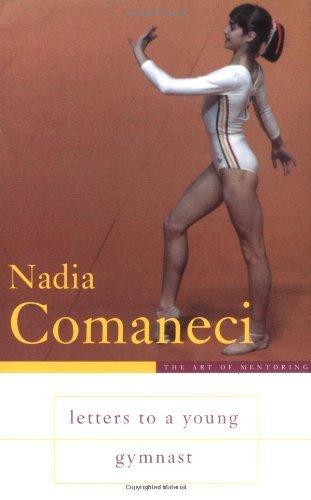
Nadia Comaneci was not only a Romanian gymnast, she was a World Champion and The Gymnast who first got all ten in a competition! If you’re interested in Nadia Comeneci’s auto-biography, “Letters to a Young Gymnast” is what you need. This book is written by Nadia and references all the major public events in her life. She even addresses the rumours around the incident with her drinking bleach and her relationship with Nicu Ceausescu, the son of Romania’s dictator.
More details and my thoughts on it are in this review.
Confessions of an Emigrant
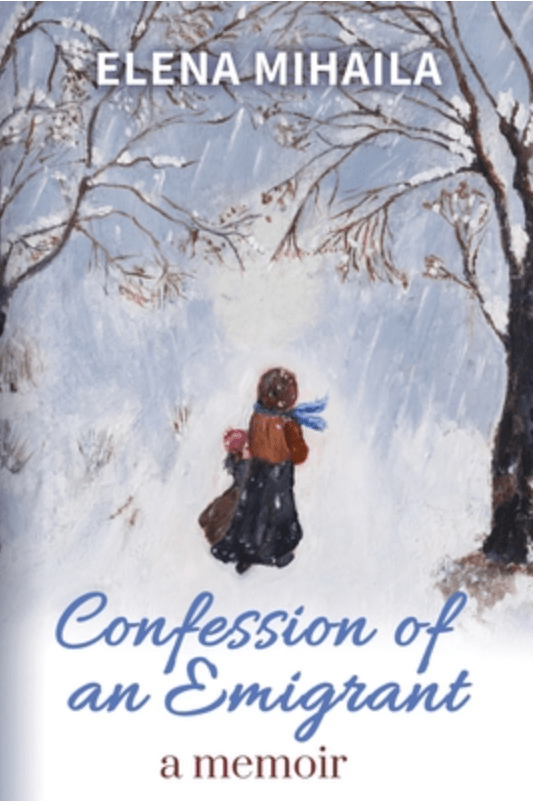
Life in Romania during Ceausescu’s dictatorship was difficult. Many chose to leave, not looking back. The author of this book did the same, but the troubles she went through highlight that leaving wasn’t exactly the easy option.
Nevertheless, Elena Mihaila persisted. Her story, “Confessions of an Emigrant“, is moving and really shows the determination of people who have nothing to lose.
More about it, here.
Forest of the Hanged
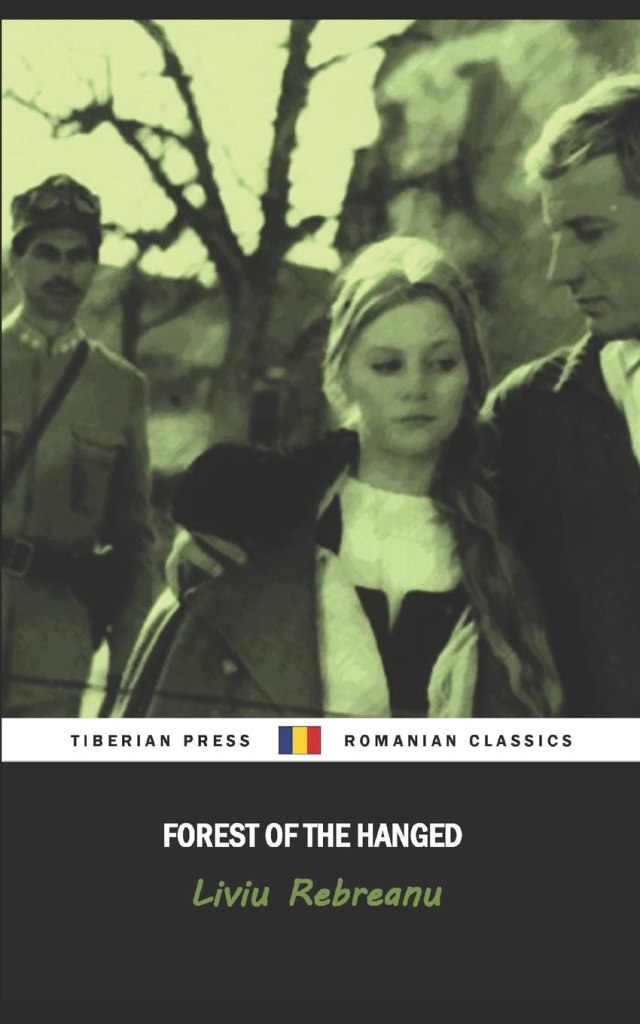
Liviu Rebreanu’s “Forest of the Hanged” unveils a haunting journey of conflict, loyalty, and inner turmoil set in World War I.
As the young Romanian soldier, Apostol Bologa, confronts the brutal realities of war, a profound struggle ensues between patriotism and personal conviction. This story was inspired by the real one, faced by the author’s brother, who had to make similar choices during the war.
Rebreanu’s poignant narrative delves into the psyche of a man torn between loyalty to his country and the profound cost of individual conscience, leaving readers mesmerized by the profound complexities of human nature in times of war.
The Book of Perilous Dishes
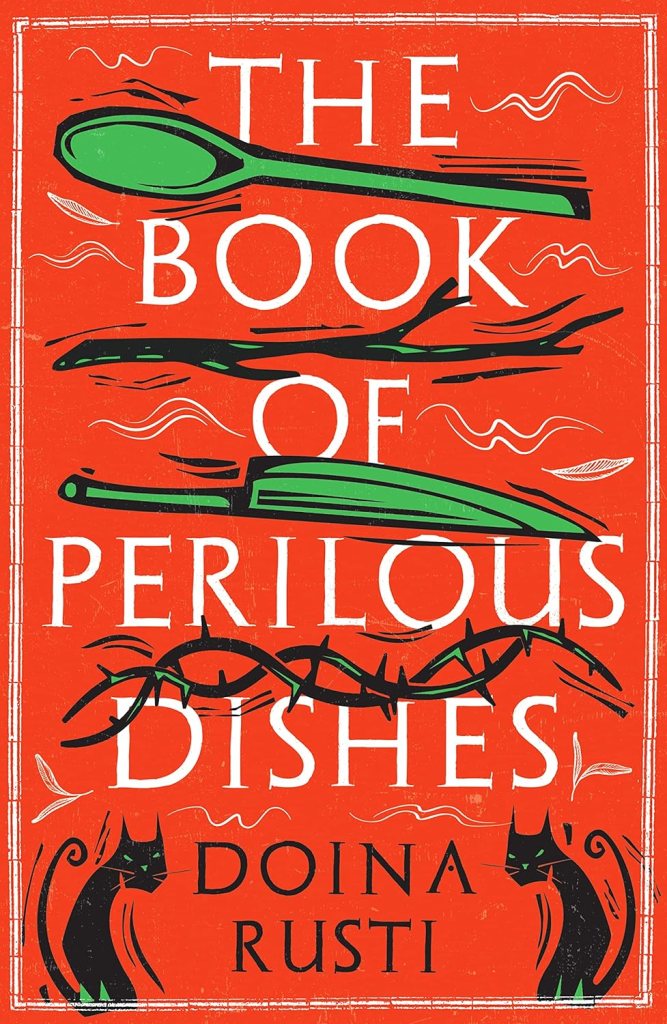
I read “The Book of Perilous Dishes” in Romanian and it was just perfect! It’s set to be published soon, so be sure to check it out!
Doina Rusti’s talent to combine playfulness, adventure, history and magic is unique! It’s not the first time I encountered her writing and I have never been disappointed!
The action here is set in 1798’s Bucharest, a year of intrigue and political machinations.
“Master chef Silica reigns supreme, sought after by all. His cooking is sublime, satisfying even the sophisticated tastes of the Greek Prince, who steals him from his rightful owner and installs him in his Palace. Little does anyone know that Silica guards the magical Book of Perilous Dishes, filled with recipes with the power to brew potent elixirs of truth, shroud minds in forgetfulness, unveil the future with eerie precision, and provoke bouts of uncontrollable laughter. When 14-year-old Pâtca, steeped in the occult arts, embarks on a mission to recover her family’s recipe book, she discovers her uncle murdered and a map that needs deciphering. As she embarks on an adventure across Romania, France, and Germany, her journey unveils family secrets that unearth history, weave magic, and unite destinies.“
Nostalgia
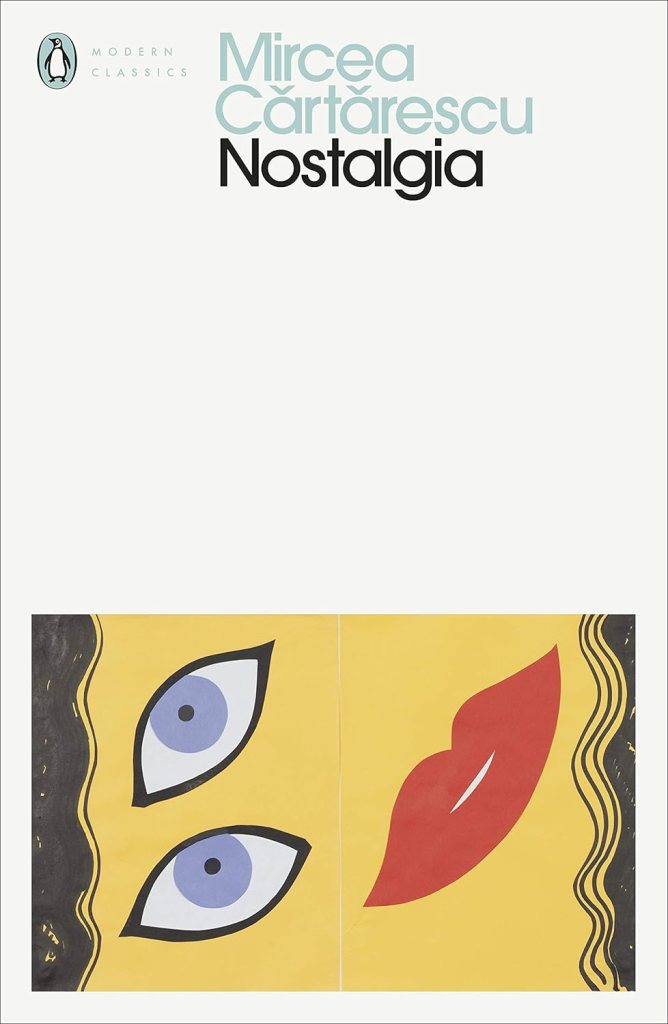
No list of Romanian Books is complete without some of Mircea Cărtărescu’s novels! “Nostalgia” is the second book I read from him and my current favourite one. The collection of short stories is surreal and poetic. Set at the boundaries of reality and imagination, each one takes you on a dreamlike journey, leaving a lasting impression of beauty and strangeness.
Given that two of the stories were even banned by Ceausescu’s regime when the book first appeared, before 1989, you can definitely expect various meanings hidden behind simple things.
Multiple readings are definitely necessary!
The Hunger Angel
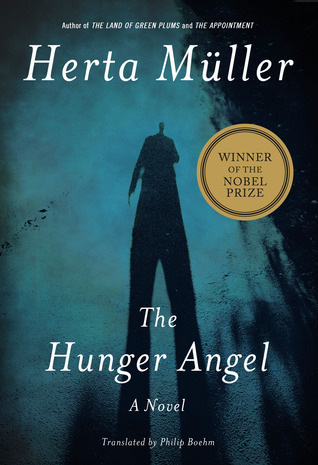
Herta Müller’s “The Hunger Angel” was haunting and troubling. It covers the story of seventeen-year-old Leo Auberg from the time when the police came to deport him to a camp in the Soviet Union until he managed to get out. Leo would spend the next five years in a coke processing plant, shovelling coal, lugging bricks and mixing mortar.
The relentless calculus of hunger governs the labour colony: one shovel-load of coal is worth one gram of bread. “Hunger becomes an insatiable angel who haunts the camp day and night, but also a bare-knuckled sparring partner, delivering blows that keep Leo feeling the rawest connection to life.”
I still get shivers when I think about the living conditions in those kinds of camps, especially considering that the story is one someone actually lived.
Squaring the Circle

“Squaring the Circle” by Gheorghe Sasarman is an amazing collection of sci-fi short stories. It was translated by the legendary Ursula K. LeGuin, so imagine how good it is!
I read it almost 10 years ago and still think about it as it highlighted the importance of the environment for the mind. It makes the case (through captivating storytelling, of course), that, for example, the way cities are designed shapes our behaviour, our goals and, ultimately, our existence.
This is clearly true, but imagine the book was originally published in 1975.
This one, you can actually borrow from the Internet Archive through your library. It’s a short one, so you’d better start reading it!
Conclusion
This is an ongoing article and I will add to the list the more I read Romanian books! Come back for more recommendations and let me know if you are interested in more in-depth reviews on any one of these books!

 Read Fine Books
I’d recommend Hortensia Papadat-Bengescu and Cella Serghi – two women authors largely ignored but worth reading.
LikeLike